
Most humans recall scars and wounds more often than joyful memories. It’s just human nature I guess. Pain is far stickier than happiness. It takes enormous will to power through a world that is filled with struggle, poverty, war, disease, suffering; and retain our hope, joy and optimism. It is simply easier to slide into despair.
What if I told you we are born with our specific burdens and gifts for a reason?
Our goal this lifetime is to unpack the gifts and release the burdens. It sounds romantic no? It’s easier and tougher than we think. it’s easier because we can find our burdens and gifts through our birth charts. Astrology has a magical way of reflecting the celestial energies at the moment you took your first breath. Those energies are codified in your birth chart.
Go to astro.com or astro-seek.com and plug in your details for a birth chart- Tropical and Placidus house system. Look at your fourth house.
Why the 4th house? There’s some debate on what it signifies depending on the kind of astrology adopted by the practitioner. It’s the nadir or the Imum Coeli/IC the lowest point in a chart. If the Midheaven/Medium Coeli/MC is when the sun is overhead at noon-ish, the IC is when the Sun is positioned at midnight-ish. If MC is the public facing, status conscious aspect of our lives; the IC is the most private, inward facing, introspective part. It is the house whose contents aren’t visible to the world and only shown to our intimate and closest people- immediate family, close friends and partners.
It is generally accepted that the 4th house signifies our beginnings. Our home environment. Our parents. Where we feel safe or are meant to be safe. The physical or mental space we retreat to when we need to relax, for comfort. Our ‘home’.
But, if you have one or more of these- Neptune, Uranus ,Pluto in the 4th house close to the IC, you’re meant to read this post.
How do outer planets, that are supposed to be generational, express themselves in the 4th house? (Note that not every individual with these placements will share the same expression of the planet.).
Many astrologers dismiss generational planets in the 4th house, considering them to be inconsequential because they are generational and not personal. Maybe so, but as the charts below will show, generational planets in the 4th do have an impact on the overall flavour of the chart as the 4th house is angular and therefore, the planetary position and aspects it makes to the rest of the chart become important. Harmonizing and integrating the energies of these outer planets becomes crucial of the chart holder wants to lead a productive, joyful life.
I’ve summarized the dire descriptions of the planetary positions as below:
Uranus in the 4th
The god of chaos as Uranus is popularly known sitting in the 4th doesn’t help in building strong foundations. Something is unusual about the native’s childhood when Uranus is in the 4th- maybe their mother is a non-conformist in a very traditional, old fashioned society. Maybe their childhood upbringing was different or unique. For example, being atheists in a highly religious neighborhood. Or parents switching conventional gender roles. Or children allowed to individuate early and encouraged to find their way through the world. Although these don’t seem necessarily problematic, for a child who needs a safe, stable and predictable environment; Uranus is anything but predictable and stable. It upends things when we least expect and throws lives into chaos. Imagine this as a regular feature instead of once a decade or lifetime. A native with this placement possibly seeks stability and predictability their whole life; in relationships or through work. But, when she/he least expects it, their inner rebel and awakener steps in to crumble things that are built on shaky foundations. The only way forward for these individuals is to integrate the energy within themselves and be willing to be different- Daring to be different, unique and quirky in a world that might not be welcoming to these qualities.
Neptune in the 4th
Feeling unseen at home. The child felt invisible or not seen clearly by their family. Maybe one or both parents were too busy with their own lives to be effective and involved parents. The child then grows up in a situation where she/he weaves an imaginary world with imaginary parents and imaginary siblings. Escaping into this imaginary world becomes a recurring theme for childhood. Parents fighting with each other? Child escapes into this world where parents share a happy marriage. Parents too busy with work and neglect their kids? Child escapes into an imaginary life where parents are indulgent and involved.
Eventually, this child becomes an adult who views escapism as a necessary coping mechanism when real life becomes hard. And adulting is hard and real life is hard. So, escapism takes the form of mind altering substances like drugs and alcohol. With Neptune close to the IC, it is critical to resist any form of addictions as Neptune predisposes the native to addictions and ‘spacing out’ in life. As usual, the closer the planet is to the IC, the more powerful the energy.
Pluto in the 4th.
This placement is often found in the charts of those who had unsafe childhoods. By unsafe, I mean maybe the child witnessed power struggles between parents, maybe the child was forced to keep secrets from one parent or both parents vs outsiders. Maybe it was a abusive home. Maybe one or both parents were using drugs or alcoholics. Emotional manipulation, passive aggression, verbal, emotional and mental abuse and more could be found in the homes of a child with this placement.
Many reasons for the child to feel unsafe in what should be a safe space. What happens when the child becomes an adult? She/he seeks safety in the world. She/he seeks to be nurtured, loved in relationships or through their career. Or through amassing huge amounts of wealth.
Sometimes an adult with this placement in their birth chart ends up repeating the cycle of 4th house themes in their lives when they marry and/or become parents. Until the adult with this placement understands that the safety that they are looking for can be found only within themselves, by being their own safe space. By developing emotional boundaries between oneself and others. By developing healthy ways to cope with pressures of life and home and relating to others.
Famous People With These Placements.
It’s fairly easy to theorize but how do these placements manifest in real life? Unfortunately, the only way to see how these placements unfold is to look at publicly available charts of famous people. Extra points if these people had documented their childhood in some way- maybe a biographical account of some sort.
Next, I decided to use positive examples of these planetary placements as there are enough negative expressions of these placements in the world. Positive expressions of Uranus/Neptune/Pluto will give us an idea how these strong energies can be integrated in healthy ways in our lives. The only icky/negative example I picked was on Pluto and that’s because I found two charts where it expresses in diametrically opposite ways. An interesting juxtaposition.
I was surprised at the sheer number of famous people with some of these placements. It is very tempting to use current controversial celebrities as examples, but since I don’t want to be slapped with a lawsuit anytime soon, I decided to use the birth charts of dead famous people with a Rodden A or AA Rating. Although people who died before the internet took off might not have very much documented information about them and thus might be boring, but they’re safer too.
We’ll just have to bridge the gap between theory and real life through a bit of speculation and a bit of common sense.
How’s that for a ‘cover your ass’ strategy?
Without further ado, let’s look at dead-famous-people-verified-birth-charts.
Uranus in 4th

He has Uranus 4 degrees away from his IC in the 4th house which makes it a powerful energy in his chart. From what I’ve gathered from the internet, it looks like Alexander Fleming(Alec) had an unusual childhood in the sense that he was 7th of 8 surviving children- 4 of them were half siblings from their father’s first marriage. Father was 59 when Alec was born and died when the latter was 7.
But Alec’s mother continued to run the farm with her oldest stepson. That’s unusual for those times, isn’t it?
It’s usually difficult to conjecture the biography of a person through one single placement, but given the story behind Alexander Fleming’s Nobel Prize winning research, it seems very Uranian energy to me. Sudden flashes of inspiration and a uniquely curious and intellectual mindset. (The 4th house ruler is Mercury sitting in the 1st close to the ascendant making a very wide square with Uranus.).
4th house also hints at end of lie circumstances. Alexander Fleming died ‘suddenly’ after a heart attack. He was going through a Uranus square Uranus transit when he died. 4th house Uranus energy at beginning and at the end of an extremely memorable, productive life.
Neptune in 4th
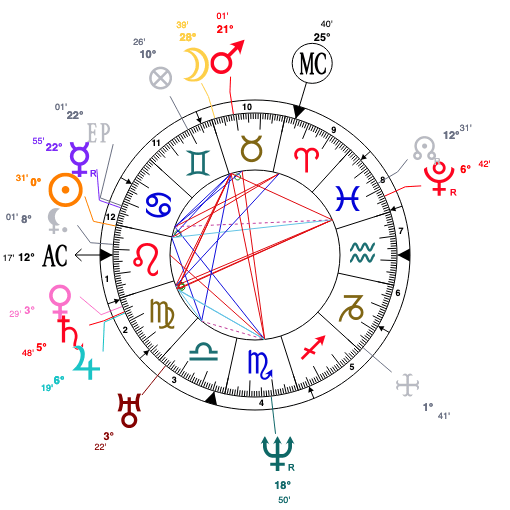
I had written about 100 words on Buzz Aldrin and his 4th house Neptune placement until I decided to double check his birth details and saw that he is still alive!!! So with due apologies, I’m going to replace Mr Aldrin with another Neptune in 4th houser- Alexandre Dumas.
With Neptune in 4th, does it seem very fitting that Mr Dumas had a vivid imagination that fueled his adventure filled, thrilling escapades in The Count of Monte Cristo, The Three Muskateers and The man in the iron mask. He had a strong applying trine between his neptune and 3rd house ruler Mercury placed in 12th which lends itself to an escapist tendency or flights of fancy, so to speak. He expressed his urge to retreat into his ideal world and escape his reality through his stories and characters. Readers who are interested in the idea of life imitating art and art imitating life would find Dumas’s life like a daytime soap opera, tragic and entertaining by turns.
Pluto in 4th
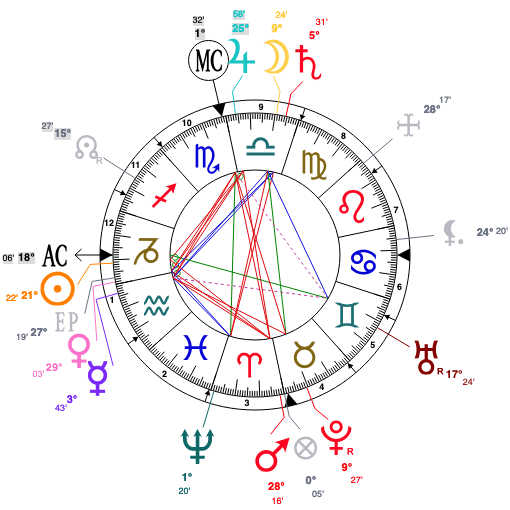
One of the most painful placements of all, and it seems fitting that it’s taken a seriously enlightened person like Swami Vivekananda to express Pluto in a world transformative way rather than the usual self destructive energy. There are a huge number of current celebrities with this placement with their private lives unraveling on social media and gossip sites which serve as a reminder of how easy it is to go down the path of self sabotage and destructiveness.
Not much is known about Vivekananda’s early childhood, but by all accounts, he was a restless, boisterous child with inexhaustible energy brought up in a home with an agnostic father and a very religious mother. This is a reliable source for more authentic information about Vivekananda. The Hindu monk, as he came to be known, was a spiritual ambassador for Vedanta philosophy and traveled the world preaching one-ness and brotherhood.
For this particular placement I chose 2 charts. One of Swami Vivekananda and the other of Heinrich Himmler, Head of the SS; to contrast the childhoods given the same placement and the manifestation of this energy.
Trigger warning: The following paragraph contains references to Heinrich Himmler.
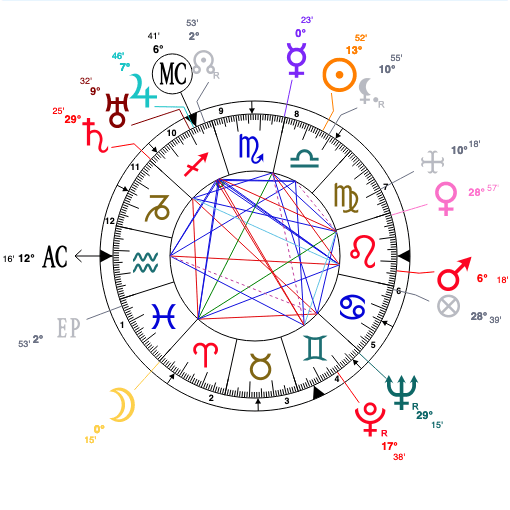
Again, scant information available about Himmler’s early years and the data available does not explain his later horrific crimes and the infamous label of ‘The Architect of Terror’. He seems to have been a sickly, frequently ill over-indulged child who grew up to be academically smart but athletically poor.
Nothing stands out in his astrological chart to correspond with his war crimes and massacre. Many astrologers have attributed his later years in SS to Neptune rather than Pluto. But, Neptune is foggy, confusing, delusional and hallucinatory at its worst. At its best, its transcendental, mysterious and sacrificial. Neptune needs to be powered by a placement which tethers it to the underworld and to the horrors therein. There’s a lot to unpack in his chart, but from a cursory glance, Pluto seems to aspect almost all planets, albeit widely, as well as ascendant.
As a palate cleanser, a birth chart with a harmonious conjunction of Jupiter and Moon in 4th in Sagittarius. The apex of a T-square and opposing the MC, this Jupiter-Moon conjunction seems to have influenced his life enormously. The chart holder’s name is Nicolaus Copernicus.
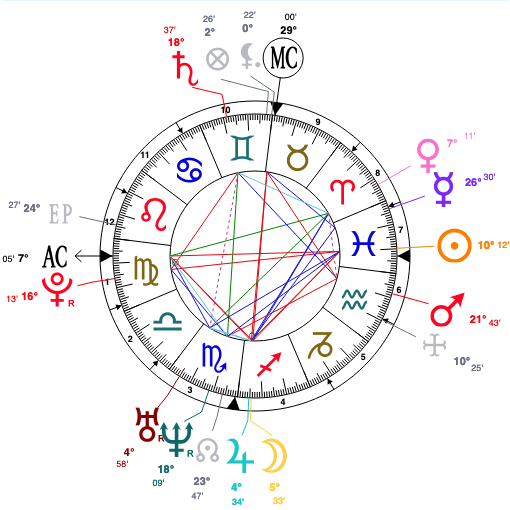
Coming up: Astrology of a childhood part 2: Personal planets in 4th house.
 umbarta.com